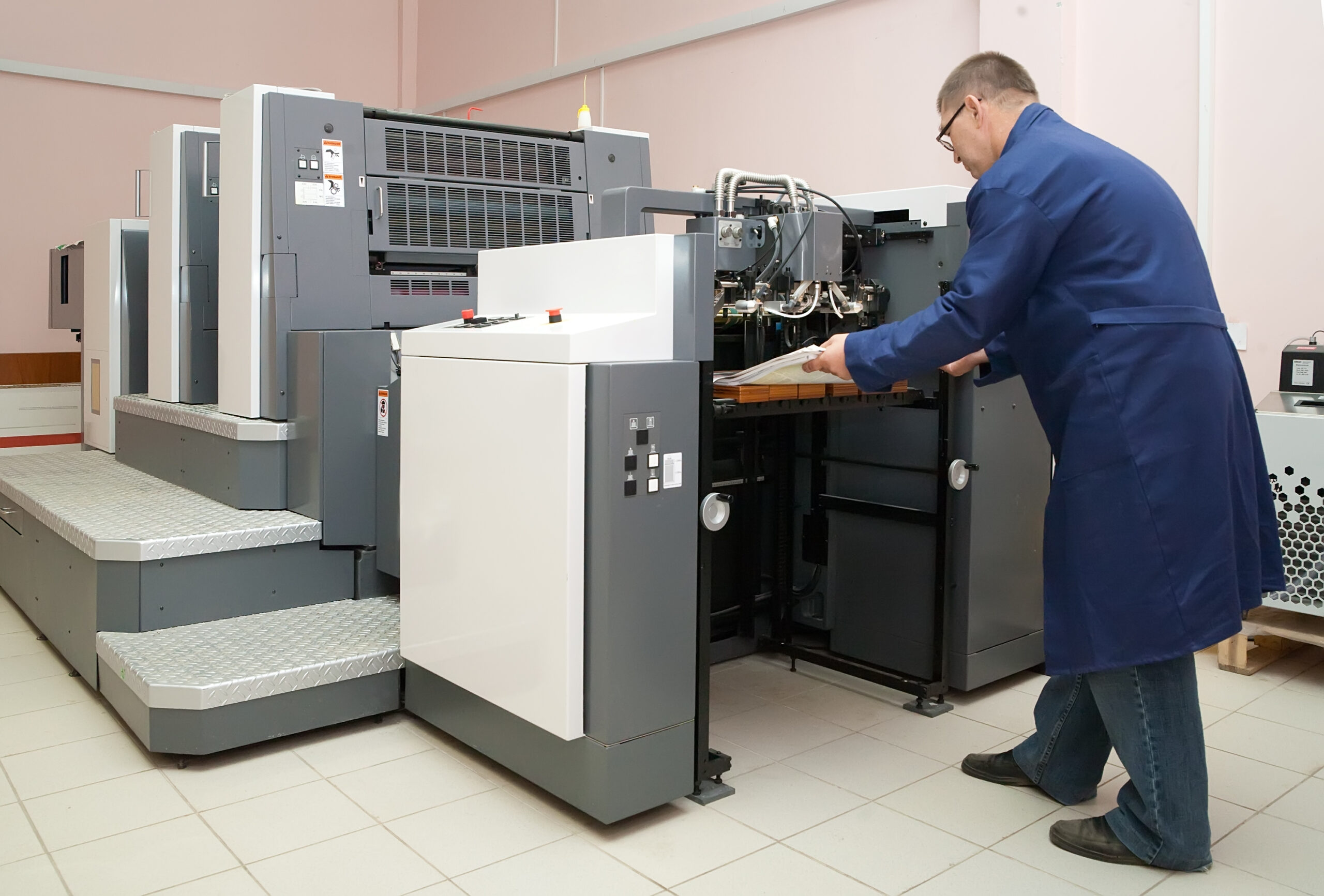
t is a method for mass production printing in which the images on the printing wheels are transferred to a roller coated with rubber rubber and then to the surface of the paper. The paper does not come into direct contact with the metal zinc, and this prolongs the life of the zinc. The flexible rubber rubber surface matches easily with the paper, which allows the process to be used effectively on paper. Even if it’s rough. The main advantage of offset printing is the high image quality. This printing can be used with small, medium and large quantities. We have two types of offset
printing machines:
1- Offset printing by feeding system with cut paper according to the required size. 2- Web offset printing Larger and faster machines are used that are fed with large rolls of paper and cut after printing.
• We also provide our clients with flexo printing, as we have a team of designers working to innovate designs for all different high-end fields to get the best product and present it to our customers.
Flexographic printing, commonly known as flexo, is a versatile printing process used for various packaging materials, labels, and other flexible substrates. Flexo machines, also called flexographic presses or flexo printing presses, are the equipment used to carry out the flexographic printing process.
Here’s some information about flexo machines:
Flexographic Printing Process: Flexographic printing uses flexible relief plates made of rubber or photopolymer to transfer ink onto the printing substrate. The process involves several key components, including the flexo machine itself, ink, anilox rolls, doctor blades, and drying systems.
Machine Structure: Flexo machines are typically made up of several units or stations that perform different functions. These units include unwind, printing stations, drying or curing systems, and rewind. The number of printing stations can vary depending on the specific machine and application.
Printing Stations: Each printing station on a flexo machine consists of a plate cylinder, anilox roll, and an impression cylinder. The plate cylinder holds the flexible printing plate, which carries the image to be printed. The anilox roll is responsible for transferring a precise amount of ink to the plate surface, while the impression cylinder applies pressure to ensure proper ink transfer to the substrate.
Substrate Handling: Flexo machines are capable of printing on a wide range of substrates, including paper, film, foil, corrugated board, and flexible packaging materials. The machines incorporate various mechanisms for substrate handling, such as web tension control systems, web guides, and registration systems to ensure accurate and consistent printing.
Ink System: Flexo machines use liquid inks that are typically water-based or solvent-based. The ink system consists of ink tanks, pumps, and a distribution system that delivers ink to the anilox roll. Modern flexo machines often utilize advanced color management and ink control systems to ensure precise color reproduction.
Drying or Curing Systems: After the ink is applied to the substrate, it needs to be dried or cured to ensure proper adhesion and durability. Flexo machines employ different drying or curing methods, such as hot air, UV (ultraviolet) curing, or EB (electron beam) curing, depending on the specific requirements of the printing job and the ink used.
Automation and Control: Flexo machines have evolved to incorporate advanced automation features and control systems. These include computerized controls for precise registration, tension control, and ink management. Automation helps improve productivity, reduce waste, and enhance print quality.
Applications: Flexographic printing is widely used in the packaging industry for applications such as flexible packaging, labels, corrugated boxes, folding cartons, and tags. It is favored for its ability to print on various substrates and its suitability for high-volume production.
Flexo machines have undergone significant advancements in recent years, including improved print quality, faster production speeds, and enhanced automation capabilities. These developments have made flexographic printing a popular choice for many packaging and labeling companies.
Obour City, Fifth District, Samira Moussa Street, Building 8